Avocado 3D Papercraft: A Designer’s Practical Review
As an embroidery designer who spends half my life staring at digitized paths and the other half wrestling with thread tension, I have learned to look past the glossy preview images. When a new file lands on my desk, I do not just see a picture; I see potential production headaches, customer reactions, and the tangible reality of the finished product. Today, I am taking a close, practical look at Avocado 3D Papercraft. While the title suggests a paper-based origin, evaluating this as a design asset for textile applications requires a shift in perspective. We must consider how its structural logic translates to fabric, thread, and the specific needs of modern craft businesses.
First Impressions: Mood and Visual Personality
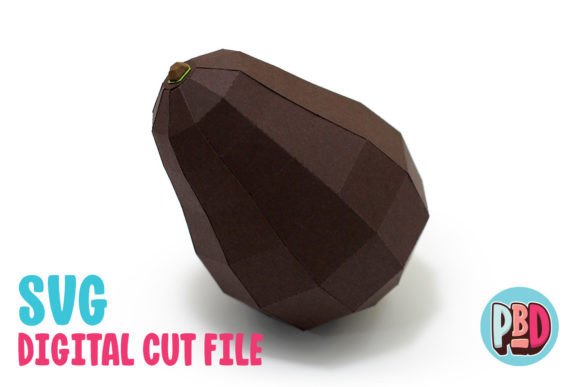
The immediate appeal of Avocado 3D Papercraft lies in its playful yet structured aesthetic. The avocado motif has transcended trend status to become a staple in contemporary decor, particularly for kitchen themes, nursery decor, and eco-conscious branding. This specific iteration, categorized under Shapes, offers a clean, geometric interpretation rather than a hyper-realistic one. For an Etsy seller or boutique owner, this is advantageous. Clean lines translate better to embroidery than complex gradients, ensuring clarity even at smaller sizes.
The visual personality is cheerful and approachable. It feels right at home on items meant to evoke comfort and whimsy. However, because it is labeled as a 3D SVG intended for cardstock construction, we must critically assess its suitability for stitching. The "3D" aspect in papercraft usually relies on folding tabs and layering. In embroidery, we achieve depth through stitch types—specifically the interplay between satin stitch borders and fill stitch interiors. If this design retains heavy reliance on cut-out aesthetics without accounting for fabric stability, it could pose challenges. My initial judgment is that it works best as a flat, stylized appliqué or a dense fill design rather than attempting to mimic physical paper folds with thread.
Real-World Application: From Digital File to Handmade Product
Let us move from theory to the hoop. Imagine you are preparing a custom order for a local café wanting branded tote bag designs. They want something recognizable but not overly corporate. Avocado 3D Papercraft fits this brief perfectly. The shape is iconic. When digitized correctly for fabric, the broad green areas allow for a smooth fill stitch that showcases the sheen of rayon or polyester thread. The pit and skin details provide necessary contrast.
Consider another scenario: a personalized gift for a baby shower. Baby clothes require delicate handling. Here, the design’s simplicity is a strength. Complex, dense stitching can make infant garments stiff and uncomfortable. If this design is optimized with appropriate stitch density, it can work beautifully on a onesie or a burp cloth. The key is ensuring the embroidery file does not have excessive underlay or overlapping passes that create bulk. For a sweatshirt embroidery project, however, you have more leeway. The thicker fabric of a hoodie can support a denser stitch count, allowing the avocado to pop with vibrant thread colors against heather grey or navy fleece.
For commercial embroidery projects, such as staff aprons for a brunch spot, durability is paramount. The design must withstand frequent washing. A well-digitized version of this avocado should use tight satin stitches for the outlines to prevent fraying over time. If the original SVG relies on thin, fragile lines for the "paper" edges, these must be thickened in the digitizing process to ensure longevity on a handmade product that sees daily use.
Navigating Technical Constraints and Fabric Choices
While the aesthetic is strong, we must address where Avocado 3D Papercraft requires careful handling. The description notes it is intended for medium cardstock. This is a crucial distinction. Cardstock holds rigid shapes; fabric drapes and stretches. Therefore, this design is not ideal for highly textured fabrics like terry cloth or loose-weave linen unless a heavy cut-away stabilizer is used. On stretchy knits, such as t-shirts, poor stabilization will lead to puckering, ruining the clean lines of the avocado shape.
Small hoop sizes present another challenge. If you are working with a 4x4 inch hoop, you must verify the scale. The dimensions provided (3.5 W x 3.5 D x 4.5 H) suggest a vertical orientation. Fitting this into a small circular hoop might require rotating the design or reducing its size, which could compromise the clarity of small details like the pit texture or leaf accents. Always test the design on scrap fabric first. Check how the running stitch outlines behave on your specific machine. Some machines struggle with sharp corners in satin stitches, which might result in bird-nesting if the design has acute angles derived from its papercraft origins.
Dark fabrics require special attention to thread choice. A bright green avocado looks stunning on black canvas, but only if the digitizer has included proper underlay to prevent the dark fabric from showing through the green fill. Without this, the vibrant color will look muddy. Conversely, on light fabrics, ensure the backing stitches do not show through the lighter green tones.
Enhancing Brand Consistency and Customer Trust
For small shop products and craft business owners, consistency is key to building trust. Using a cohesive set of design assets helps establish brand recognition. If your shop focuses on botanical or kitchen-themed items, Avocado 3D Papercraft can serve as a anchor piece. It signals a modern, playful vibe. When customers see high-quality stitching on a custom apparel item, they perceive higher value. Sloppy edges or uneven fills detract from this perception.
This design also lends itself well to printable mockups for digital listings. Before you stitch a single thread, use the SVG to create digital previews for your online store. Show the avocado on a tote, a pillow cover, and a tea towel. This helps buyers visualize the embroidered patch or direct stitch application in their own homes. It reduces hesitation and increases conversion rates. However, ensure your mockups accurately represent the final stitched look, not just the flat digital graphic.
Practical Notes for the Embroidery Designer
Before committing to a large production run or listing this as a new item, follow these practical steps:
- Verify Licensing: The product description mentions "INCLUDED WI," which likely refers to included instructions or warranty information, but it is vague regarding commercial rights. Always confirm whether the digital embroidery file license allows for selling finished physical items. Never assume.
- Test Stitch Density: Run the design on a similar weight fabric to your final product. Check for puckering. If the fabric pulls, reduce the density or change the stabilizer.
- Check Color Contrast: Use standard thread charts to select greens that offer enough variation between the skin, flesh, and leaf. Monotone greens will flatten the design.
- Inspect Small Details: Zoom in on the digitized file. Are there tiny jumps or unnecessary trims? Clean up the pathing to reduce production time and thread waste.
- Compare Backgrounds: Stitch one sample on light fabric and one on dark. This will reveal any issues with underlay or coverage that need adjustment.
In conclusion, Avocado 3D Papercraft offers a charming, versatile motif for today’s maker. Its success in embroidery depends not on the original papercraft intent, but on how thoughtfully it is adapted for textile constraints. By respecting fabric behavior, optimizing stitch types, and verifying commercial terms, you can transform this simple shape into a standout element of your design assets. Whether for a holiday embroidery gift or a year-round small business merchandise staple, this design has the potential to delight customers when executed with professional care.